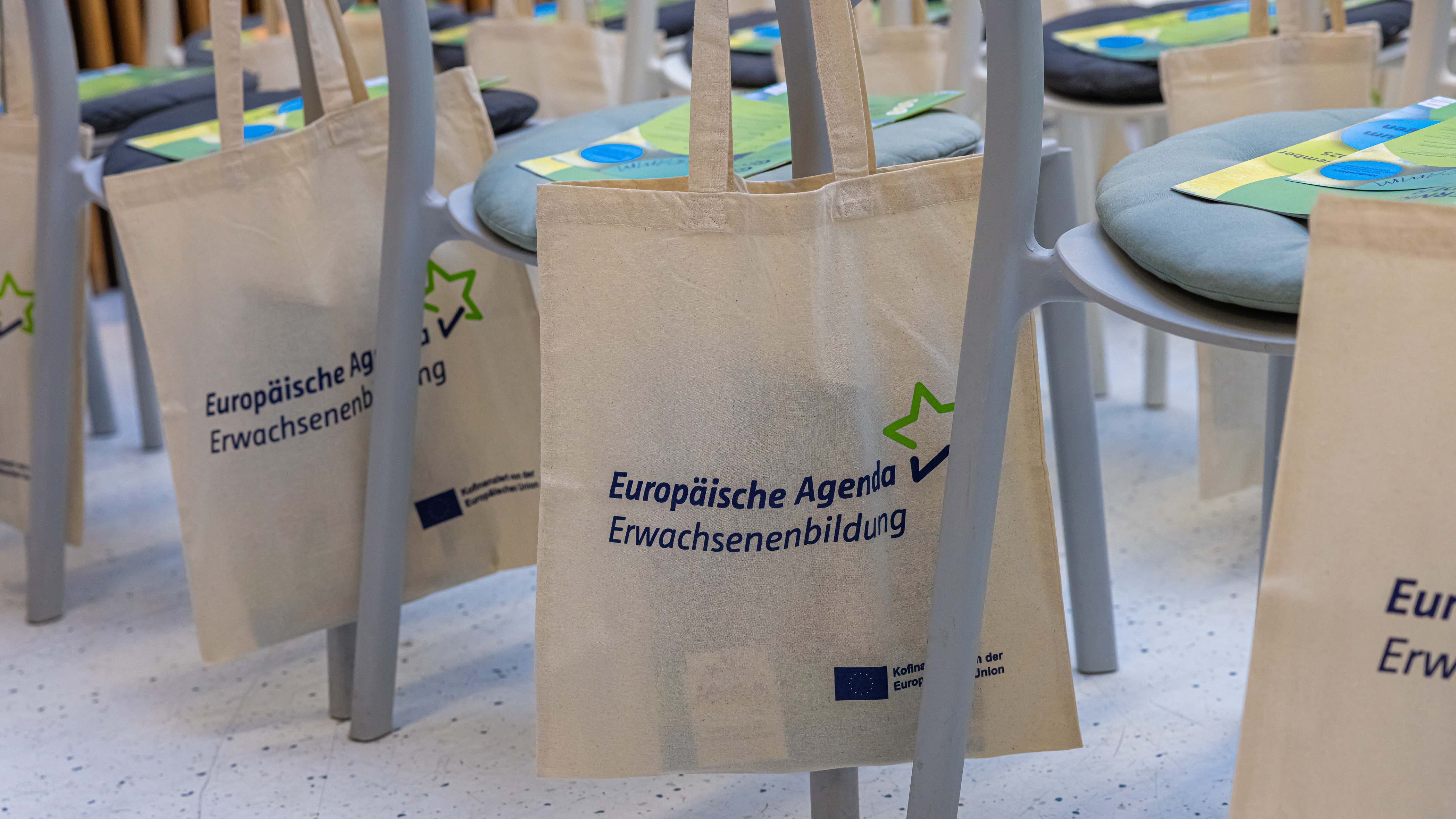
The European Agenda for Adult Learning is an EU policy framework that aims to improve the quality and accessibility of adult learning in Europe. Its goal is to promote adult learning and improve learning opportunities for all citizens. The role of adult learning should be strengthened and its importance emphasised. National coordination centres across Europe support these goals.
In November 2021, the new European Agenda on Adult Learning was adopted by the Council of the European Union. The agenda defines the political framework for the further development of adult learning in Europe. It helps to define the content priorities of European adult learning policy for the years 2021 to 2030:
The focus is on expanding cooperation between policy and practice in adult education. Cooperation and networking among all stakeholders at local, regional and national level should be promoted in order to respond to learners' needs in the best possible way.
The aim is to raise awareness of lifelong learning and reach people in every stage of life. Personalised educational guidance and the validation of individual learning experiences should help to make learning processes more targeted and user-oriented.
Adult education should be flexible in terms of time, location, format and resources in order to promote participation and motivation. In addition, financial incentives and other support measures should be used to boost learners' motivation.
The focus is on the professional development of education staff, the mobility of learners and teachers, systematic quality assurance and the targeted support of disadvantaged groups.
Adult education should empower people to actively participate in digital and ecological change. This requires modern learning concepts, digital skills and concepts for integrating sustainability into educational processes.
By 2025, at least 47% of 25- to 64-year-olds should have taken advantage of an educational opportunity within a 12-month period.
By 2030, at least 60% of adults aged 25 to 64 should have participated in an educational program in the last 12 months.
The new European Agenda for Adult Learning embeds its demands and objectives in the European Pillar of Social Rights. The European Pillar of Social Rights supports the project of creating an inclusive, fair and sustainable Europe.
The European Pillar of Social Rights is based on the principles of solidarity, equal opportunities, improved working and living conditions, social protection and access to high-quality and inclusive education.
One of the 20 principles of the Pillar of Social Rights is the right of Europeans to education, training and lifelong learning. The focus here is on acquiring skills that enable everyone to participate fully in society and successfully navigate transitions in the labour market. In this sense, increasing adult participation in continuing education not only improves employability, but also social justice in Europe. Among other things, the action plan sets out the goal of equipping at least 80% of 16 to 74-year-olds with basic digital skills, thereby closing the digital skills gap.