Democracy education and competence in dealing with artificial intelligence (AI) are closely linked. Therefore, stakeholders in adult education should be mindful of how AI is changing the conditions under which democratic opinion is formed and how adult education and continuing education can empower people to navigate these developments. At the same time, the question of how democracy education can more fully incorporate digital and AI-driven information spaces—and what competencies are needed to do so—plays an important role.
Answers were provided by the two-day online conference “European Perspectives: Critical, Creative, Competent—Impulses for Democracy and AI in Adult Education,” held on June 30 and July 1, 2026. It was organized by the National Coordination Office (NKS) for the European Agenda for Adult Education at the National Agency for Education for Europe (NA at BIBB), the Bavarian Adult Education Association (Bayerischer Volkshochschulverband e.V.) (bvv), and the Thuringian Adult Education Association e.V. Around 200 participants from all over Germany took the opportunity to gain inspiration for their own work through engaging keynote presentations and workshop sessions.
While the first day of the event focused on democracy and participation, Day 2 addressed the development of new learning spaces using AI and the skills that adult educators need to remain digitally competent and capable of acting democratically. The European perspective was consistently incorporated into these discussions.
In her opening remarks, Dr. Regine Sgodda, Executive Director of the bvv, emphasized just how relevant this topic is to the field of adult education. She stressed: “Artificial intelligence has found its way into central areas of our daily lives at a remarkable pace. At the same time, we are observing a threat to liberal democracy, the questioning of educational programs that strengthen democracy, and a threat to social cohesion and our own judgment. This often becomes relevant in the context of AI-generated content.” At this point, she also brought the European dimension into the discussion. She did so using the example of the development of the EU AI Act—a regulatory framework developed through European dialogue that defines how artificial intelligence can be designed responsibly.
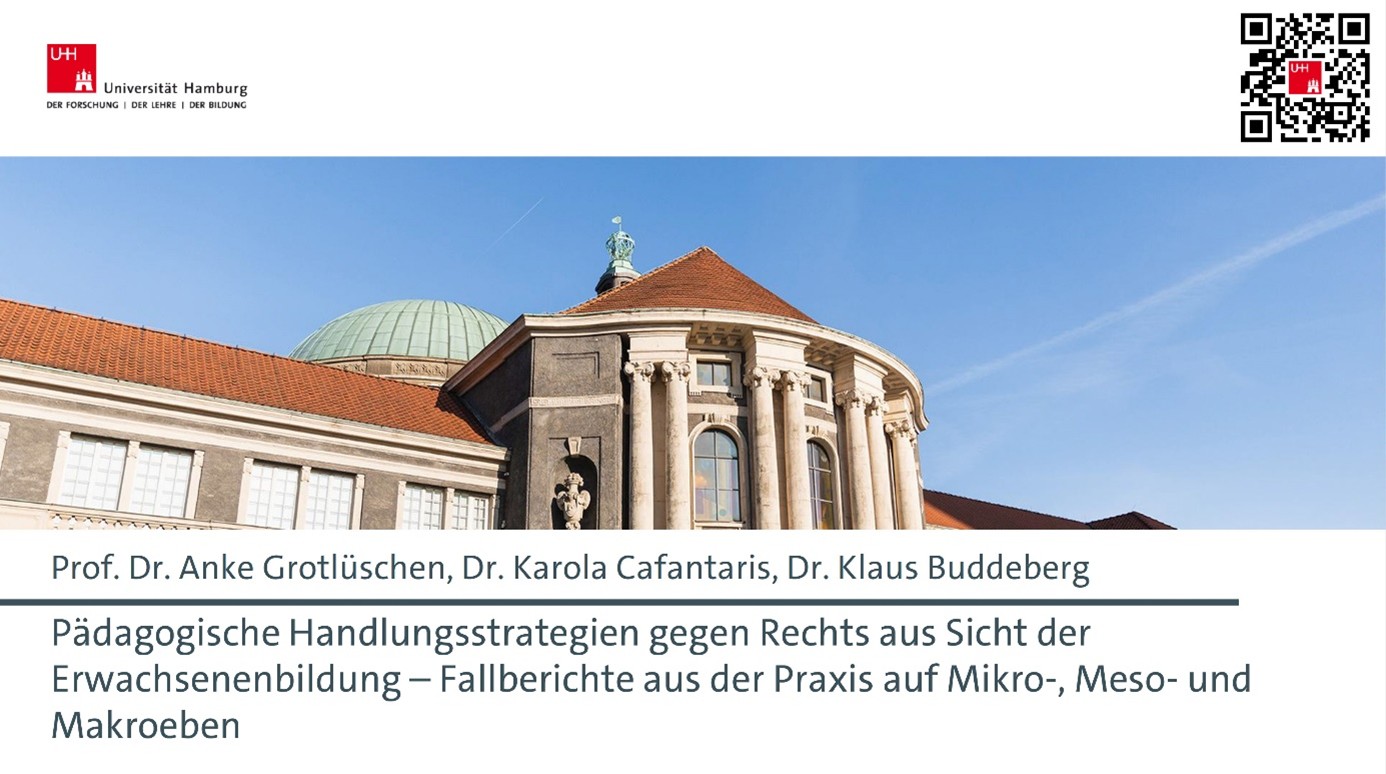
The citizen science project “Resilient Democracy in the Education System,” carried out in 2024–25, is the first of its kind to document how adult education institutions are affected by populism rooted in misanthropy and racism, and how they can respond to these threats. It was carried out by Professor Dr. Anke Grotlüschen, Professor of Lifelong Learning at the University of Hamburg, in collaboration with partners from the adult education sector. The project combines academic perspectives with practical experience. The goal is to ensure that adult education institutions remain capable of taking action, to identify effective responses, and to make these available for practical use. To this end, with the support of the German Adult Education Association, a nationwide online survey was conducted to collect and document case reports of discrimination and discrediting, political intimidation, and right-wing populist influence.
Grotlüschen presented the project’s findings and linked them to the question of how to build and strengthen “firewalls” to protect against the far right in the education system. In her view, adult education is a “pioneer” in this regard because it operates more flexibly than other areas of education and can therefore modernize more quickly. Grotlüschen described examples of situations of risk and linked these to the development of appropriate counterstrategies at the educational policy and institutional levels, as well as in actual classroom settings.
In terms of content, the spectrum of counterstrategies—which were subsequently discussed in so-called reflection sessions—ranges from legal regulations, educational outreach, and publications on a resilient democracy, through alliances and clear guiding principles, to strategies for everyday teaching practice. These can include, for example, prevention measures and professional development initiatives.
„Civic education is not neutral. It is the democratic duty of teachers to reject anti-democratic and anti-human sentiments, as well as historical revisionism. Adult education institutions are places where fundamental democratic values must be protected.“
However, position papers alone were not enough. The key, she said, was to empower people on the ground and protect teachers in such situations. Grotlüschen added: “We need to move from talk to action.” This means, for example, that policymakers and the leadership of these institutions must take a clear stand and stand behind the values of democracy and social cohesion. Grotlüschen said her hope is that “a shift will take place across these programs,” including with regard to the question of “how we can better re-engage with people.” If this does not work, disciplinary measures may also be considered when dealing with difficult participants and staff members. The book *No Power to Powerlessness—How We Overcome Crises and Defend Ourselves Against Fascism* by Matthias Quendt (2026) contains a comprehensive list of suitable counterstrategies.
The importance of literacy for a vibrant democracy and active participation was highlighted in the presentation by Maria Deskur, president of the European Reading Foundation in Poland and a strong advocate for the importance of literacy in European education. She said: “Reading is not just an individual skill, but the foundation of all learning and a prerequisite for a sustainable and democratic life—both on an individual and societal level.”
In this context, the results of the International Primary School Reading Study (IGLU), published in 2023, are cause for concern. According to the study, fourth-grade students in Germany now read significantly worse than they did years ago. One-quarter of the children do not meet the internationally established minimum standard for reading, which is necessary for continued successful learning.
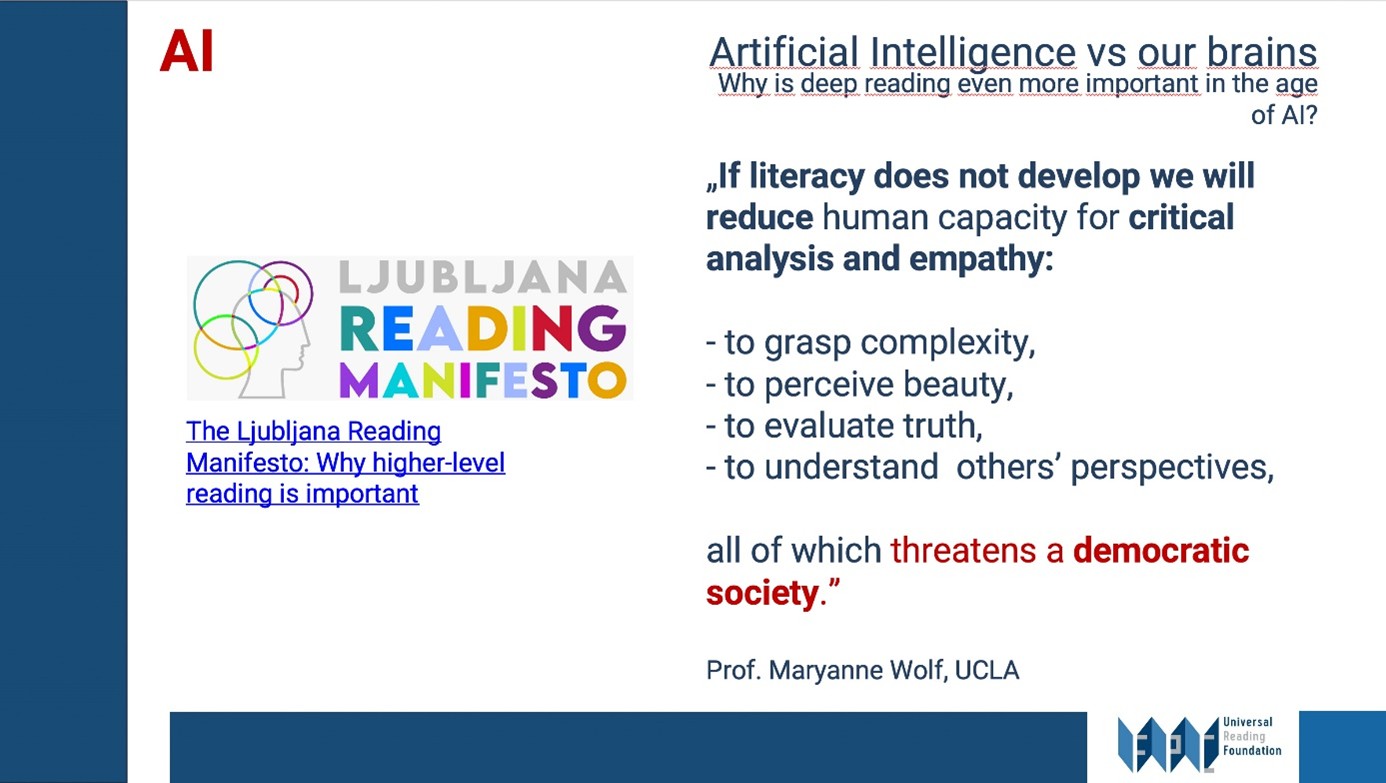
“Not reading is not only bad for us, but also dangerous in terms of how we view the future of Europe and our countries,” Deskur warned, referring to the Ljubljana Manifesto on the importance of advanced reading skills, developed by neuroscientists in 2023. Learn more about the Ljubljana Manifesto on this website. The manifesto calls on policymakers and society to strengthen reading at higher levels in order to safeguard analytical thinking and democratic values. Deskur stated: “It says that we must develop a certain level of competence to maintain control—that is, to avoid becoming subjects controlled by AI, but rather to remain among those who can shape their own lives and futures.”
In the ensuing discussion, Professor Dr. Anke Grotlüschen emphasized how relevant the topic of literacy is to the stability of democracies. For example, the Level One Study (LEO Study) conducted by the University of Hamburg makes it clear that people with low literacy skills increasingly struggle with critical thinking and questioning. Read more about how the LEO Level-One Study examines the literacy levels of the German-speaking population.
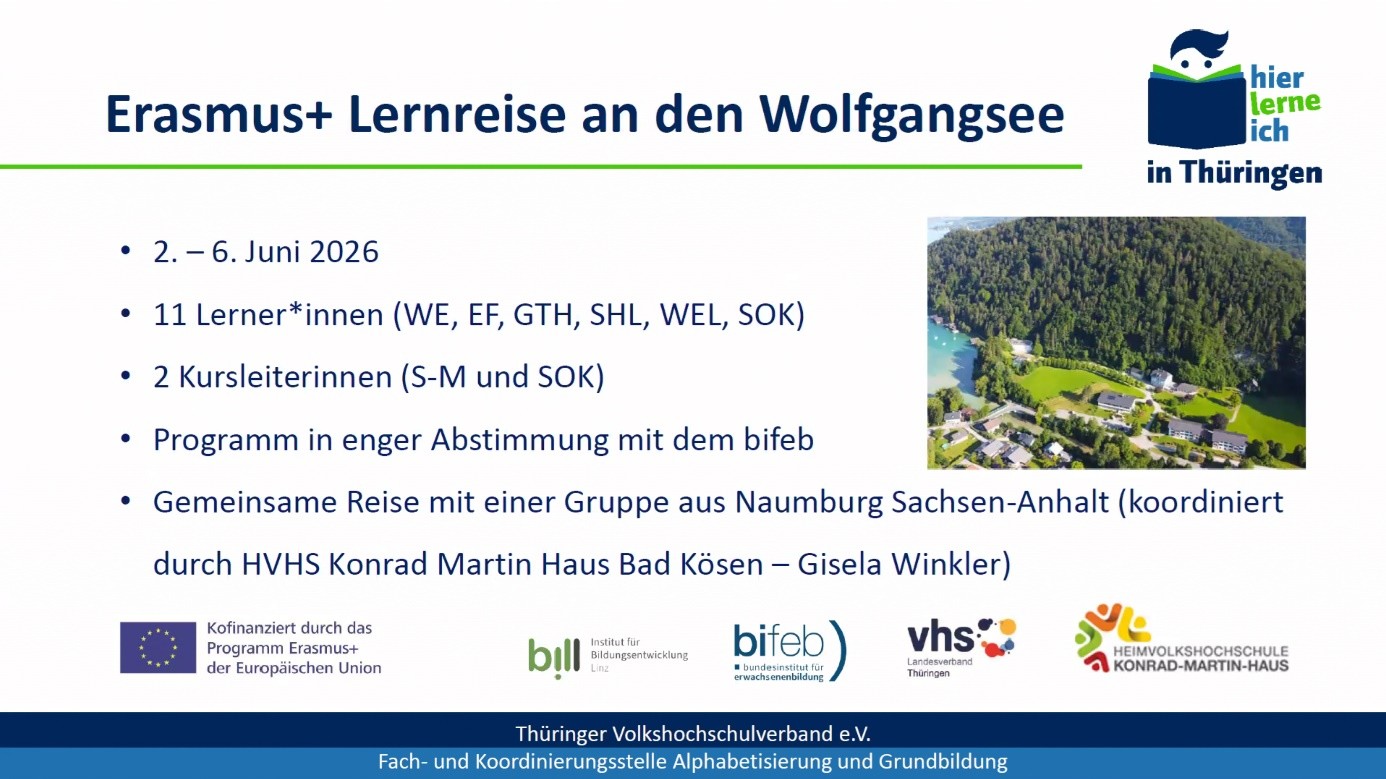
Fabian Walpuski from the Thüringer Volkshochschulverband e.V. provided a good practical example of active participation in literacy, reporting on an Erasmus+ learner mobility program focused on AI in literacy education. The program linked literacy and AI in such a way that participants learned about creative applications of artificial intelligence while also grappling with the risks and dangers of manipulation and deception.
“An important insight was that even learners with basic educational needs use AI when they are given the opportunity to try it out for themselves and are well supported,” Walpuski explains. “We looked at where people encounter this topic in their daily lives and tried to convey the possibilities of AI through practical tasks. Our aim was to create the conditions for competent use.”
The “learning journey” format proved to be extremely well-suited for this purpose. This was confirmed by Maik Stadermann from the Thuringia Learners’ Council, who participated in the journey as a learner. He emphasized that such a stay abroad always boosts one’s self-confidence, because many of the participants would not have dared to travel abroad on their own. According to Walpuski, having this kind of experience as a group contributed greatly to the program’s success, especially since the combination of AI and literacy impressively demonstrated what is possible in practice. Learning journeys are a good example when it comes to the benefits of Erasmus+ in adult education (see below for more on this).
Day 2 of the event was entirely dedicated to artificial intelligence. A total of ten workshops explored how AI can be used to design new learning spaces in a creative, practical, and participatory way, and what skills are necessary to do so. What do adult educators need to know about AI in order to act accordingly, and what tools and materials are already available?
The Code of Conduct—a Joint Commitment
Earlier, Monika Ilves, a board member at the Center for Digital Progress D64, presented the Code of Conduct, a set of guidelines for the democratic use of AI. You can learn more about the background of the Code of Conduct on this website. She noted that while artificial intelligence is widely used, there are hardly any criteria governing how it is used. Even though AI has long since become part of mainstream society, it should not be left solely to the major technology companies. Rather, shaping it is a task for civil society. Ilves stated: “We view the digital transformation as a great opportunity to improve how we live together in our modern society. We want to help shape social, environmental, technological, and political developments in a constructive, critical, and creative way.”
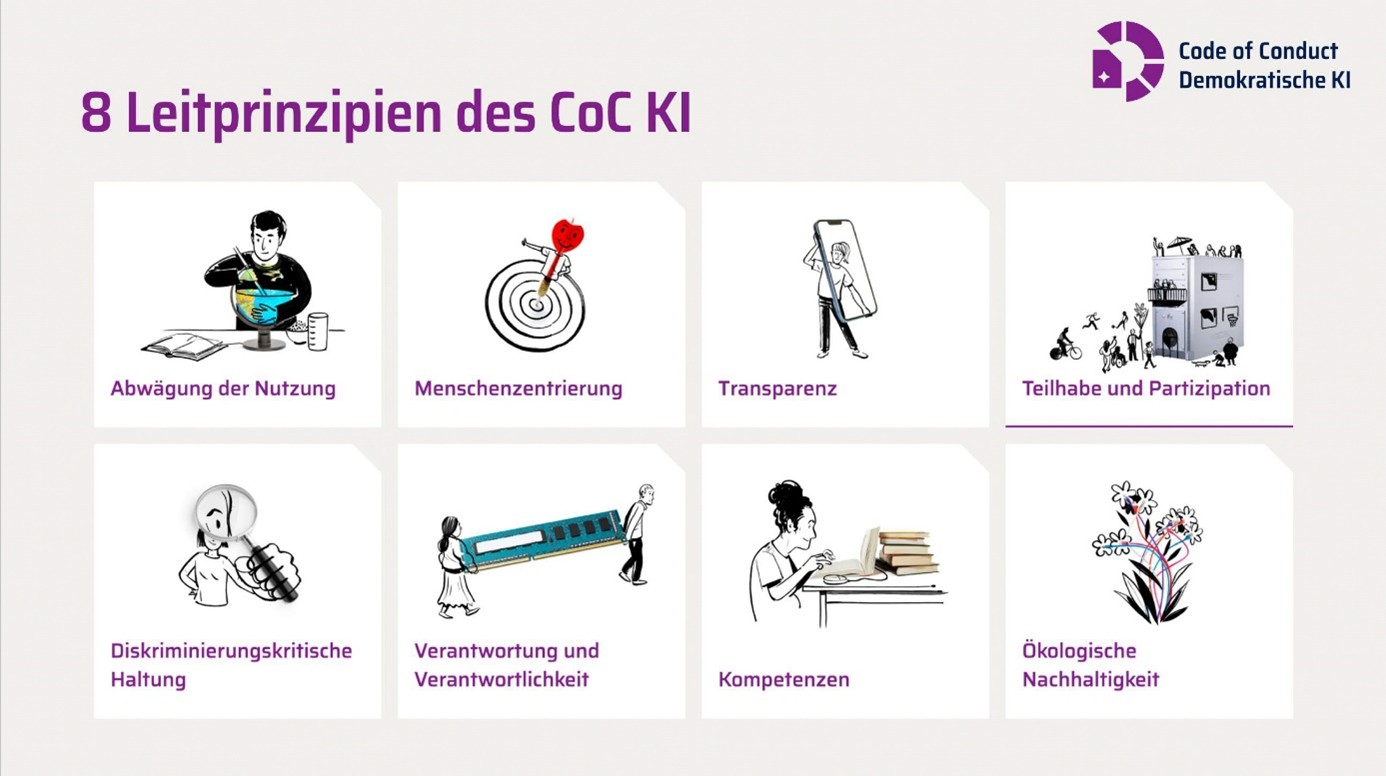
The Code of Conduct (CoC) serves as a shared commitment to responsible AI use. More than 220 organizations from German civil society (as of 2026) have already signed it. Its significance is embodied in eight guiding principles: ranging from a human-centered approach and a stance critical of discrimination to inclusion, participation, and transparency in the use of AI. The overarching question in all of this is: How can AI be meaningfully used and shaped in a way that aligns with an organization’s own goals and values?
How can institutions get started?
Ilves recommended that stakeholders approach the Code of Conduct iteratively and in small steps, while also scrutinizing processes within their own institutions. It is important, she said, to view AI as a tool whose use does not necessarily lead to improvements per se. Using a values compass, the Code of Conduct enables institutions to define for themselves how and where AI can be implemented in their respective contexts. The guiding principle here is: “Competence should always come before the use of AI. One must acquire a certain level of expertise and bring a thoughtful attitude and critical thinking to the table in order to use AI effectively. The crucial question is not when to use AI, but how.”
For example, it could be sensible to delegate individual tasks to AI as part of course preparation. In any case, it is advisable to thoroughly understand the subject matter in advance and to develop your own approaches to solutions. This implies that the AI’s assumptions can be critically examined and evaluated.
Workshops on various topics provided an opportunity to examine in detail the potential applications of AI and the issue of democracy education in the AI era:
For example, the discussion centered on the use of AI to automate learning modules in vhs.cloud, customized AI tools for teaching practice, and personalized learning paths powered by AI. When considering AI tools for teaching practice, it is important to first precisely define the areas in which AI use is effective. In this context, one should not rely on a single provider in order to cross-check answers and identify systematic errors or bias in the results.
Meanwhile, the workshop on personalized learning paths focused on creating AI chats with practice scenarios for learners—a highly practical topic for teachers. These should provide a step-by-step introduction to how to use the tool and a debriefing of the exercises in class, particularly with regard to precise prompting. With the help of AI, simple interactive exercises can be created that can be used in class or as homework.
Speaking of teaching: Did you know that you can also create your own teaching materials using AI tools? For example, NotebookLM offers a design studio with various presentation formats suitable for developing learning content. With Claude Cowork, on the other hand, the AI can be directed to your own folders to create materials from them.
Another fascinating topic was the question of AI literacy from the perspective of media education. In this regard, the Code of Conduct could serve as a low-threshold starting point for building competencies within one’s own organization. It is important to take a strategic and structured approach; competency development should always be linked to empowering stakeholders to reflect, critically assess, and recognize risks.
The interactive audio drama “Unter Verdacht” offers a more emotional entry point —you can find more detailed information about it on this website. This program is aimed at anyone interested in digital spaces but who has had little access to political education forums so far. It aims to help participants understand the digital world as a political space and to strengthen users’ judgment and critical thinking skills. The latter was also the focus of the workshop on “Manosphere,” a loose and predominantly anti-feminist network that primarily uses internet forums and blogs to promote topics such as self-optimization and hegemonic masculinity. During the discussion, participants exchanged strategies and recommendations for addressing this topic in educational practice.
Europe played a key role in the workshops on three separate occasions, for example regarding the steps needed to implement the EU AI Act in adult education. The new regulations have shifted responsibility for AI literacy in such a way that member states and institutions can support and promote its implementation. “You yourselves are the ones who build democratic competence,” emphasized Veerle Ponnet, education expert and course director at the Europass Teacher Academy in Belgium.
As part of the Erasmus+-funded partnership “Democracy Education in the ‘AI Era’: Between Manipulation and Empowerment,” organizations from Germany, Austria, and Belgium collaborated to develop learning materials on the competent use of AI. The practical content is designed to strengthen political judgment and build critical AI literacy as a key target competency in interdisciplinary political education. It is available on the project’s website.
An ethical and legal guide to the use of AI in education forms the core focus of the project “Empowering Educational Leaders with AI Strategies,” the results of which are available on this website. The project, which is also funded by Erasmus+, is led by an international consortium of organizations from nine European countries, whose expertise was incorporated into the guide. The guide includes examples and also serves as a self-assessment tool. In addition, the EU AI Act has been presented in graphic form.
The discussions following the keynote presentations and workshops made it clear that the most important questions regarding the topics discussed are not limited to the national context. The European perspective highlights experiences, practical examples, and potential solutions—both in partnership projects and in Erasmus+ mobility programs for learners and education staff. This was demonstrated by the findings from the Erasmus+ study tour from Thuringia and the workshops on AI held on Day 2 of the event.
Tanja Möller from the National Agency (NA) at the BIBB highlighted the opportunities that Erasmus+ offers to stakeholders in adult education. She pointed out that, in addition to learners, staff members from adult education institutions can also participate in the program and gain qualifications abroad through job shadowing or similar formats. Erasmus+ opens up opportunities for genuine participation as well as for building competencies and broadening one’s horizons. In many organizations, this has become a key component of personnel and organizational development. Möller used various examples to illustrate how institutions can make concrete use of the program. Information on the benefits of Erasmus+ in adult education is also provided by the campaign “When Exchange Opens Doors,” which can be found on the NA at BIBB’s service page.
Dr. Marc Jäger from the Bavarian State Ministry of Education and Cultural Affairs used Bavaria as an example to illustrate how Erasmus+ can be conceived and implemented at the state level. He also provided an outlook on the challenges that European adult education will face in the coming years. Jäger stated:
„The fact that Erasmus+ is a great success at the national level is evident from the growing number of institutions that are taking advantage of its offerings and reaping the benefits of the program. This has created a strong community that has been working for many years to advance adult education in Europe.“
The program’s greatest merit, he said, is that it functions as a European project across various levels and has an impact both on the structures of the funding organizations and on many topics, even if these do not necessarily mention the word “Europe.” Accreditation has also created an opportunity to work sustainably. Jäger adds: “The goal should always be to structure the timeframes for funding programs in such a way that stakeholders can plan for the long term and launch projects that are not limited to the respective fiscal year.”
Considering all this, adult education has firmly established itself in Europe. It has found its place alongside major “institutions” such as universities and schools and is well-equipped for the future. Nevertheless, according to Jäger, adult education will also have to compete for its share of funding in the coming years. That is why it is important for stakeholders to stand together and jointly represent their interests. One of the strengths of adult education lies in supporting people’s education throughout their entire lives in a world where job profiles change daily. The fact that it can also contribute to societal developments should always be kept in mind to some extent.
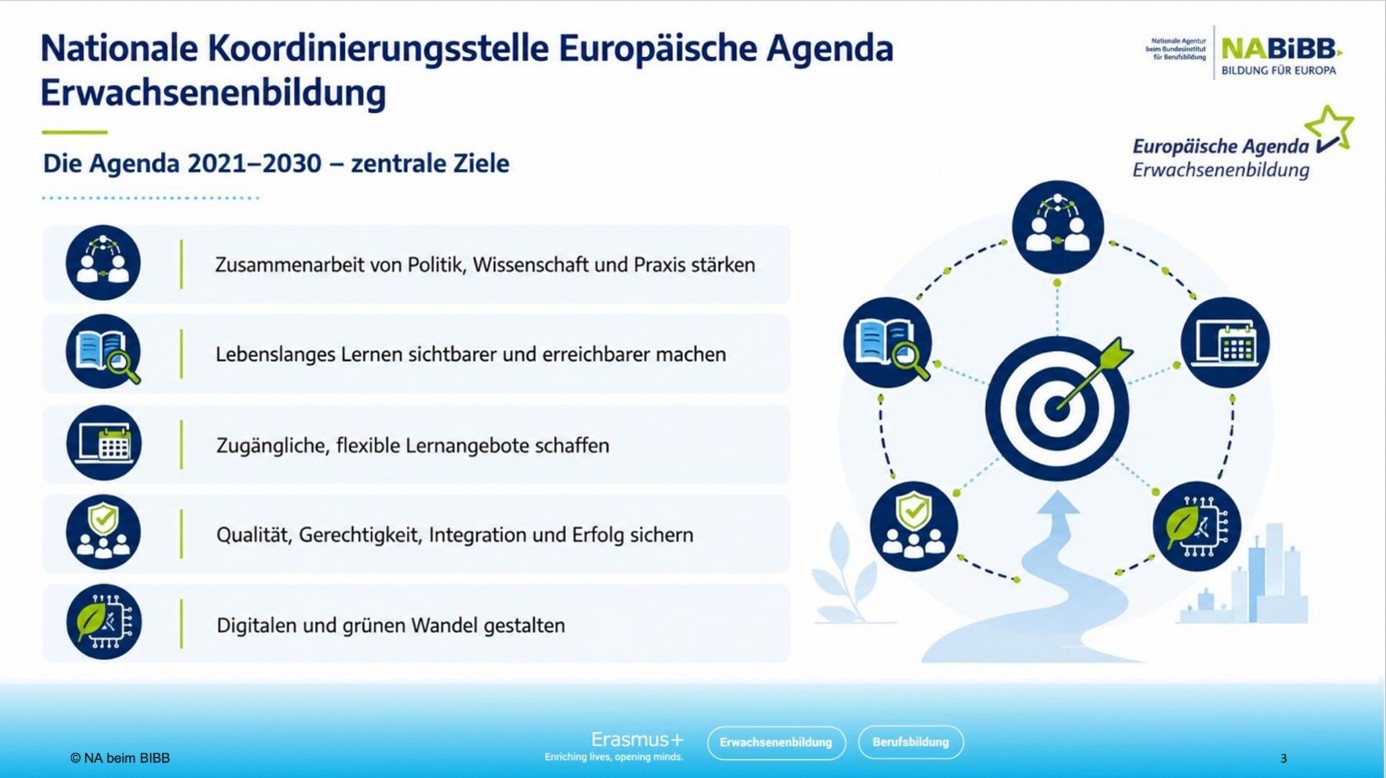
This is also a key priority of the European Agenda for Adult Learning, which, as the European Union’s policy framework, brings together the most important issues and highlights the significance of adult learning at the European level. The goal is to further improve the quality of programs and enhance access to learning opportunities for adults. Simone Kaufhold, coordinator at the National Contact Point (NCP) for the European Agenda for Adult Learning, highlighted the role that adult learning can play in social participation, equal opportunities, and lifelong learning. The work of the NKS has a Europe-wide impact and is carried out in collaboration with the Erasmus+ program, the EPALE adult education platform, and the EU consortium project RIA on the research-based impact analysis of Erasmus+ adult education programs.
Adult education—both at the national and European levels—can create spaces for the topics and challenges discussed during the event. It is more than just a catalyst for social change—it is a place where guidance is fostered—critically, creatively, and competently. The closing session made it clear that the event provided numerous ideas in this regard. When asked about the next steps participants would like to take, the most common plans were to develop learning modules and pathways using AI, to take advantage of professional development opportunities, and to apply the ideas from the Code of Conduct to their own institutions. At the same time, the focus was on strengthening literacy skills and leveraging European perspectives through Erasmus+. Regarding the contribution of adult education to a “resilient democracy,” the desire for networking and the exchange of experiences was mentioned above all else. There was consensus on the desire to establish strong alliances against current and future threats.
The materials and complete presentations for the event can be found on the Taskcard.
Here you will find the complete event program.